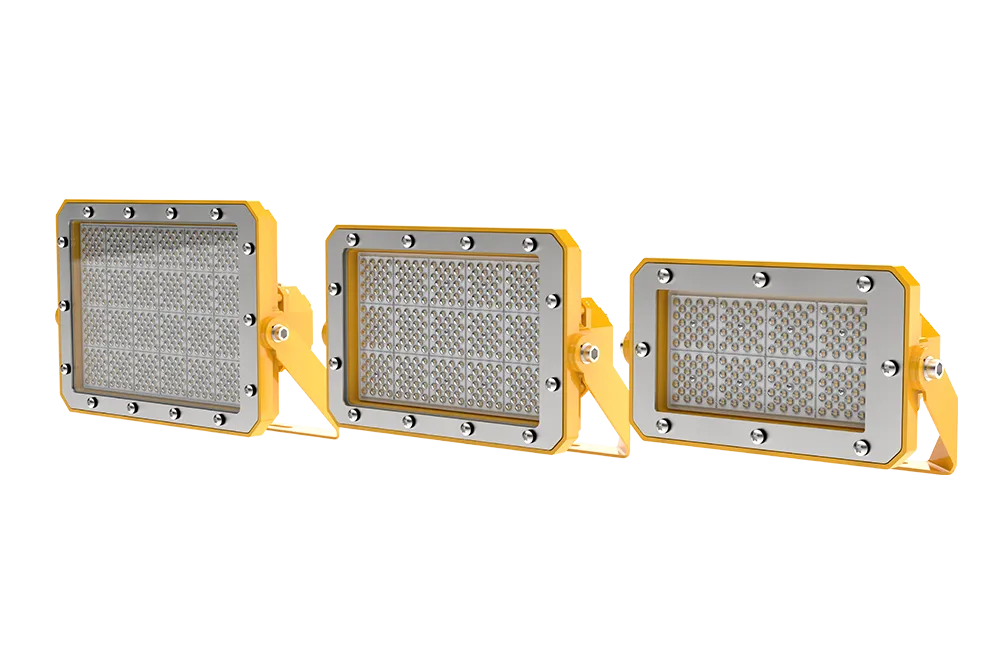
Launching said text explores several devices relating to hazard-resistant systems among commercial zones.
Running securely alongside risky spots namely chemical sites requires designed tools with the goal to thwart likely occurrences. Ignition-safe illumination systems are indispensable modules in those arenas, built to withstanding ignitions, ignitable vapors, and volatile regions. The aforementioned machines are not inherently protected; in contrast they are manufactured to confine any inside flash or flare and halt it from igniting a more extensive burst in the surrounding space. This presentation discloses important facts about explosion-proof sources, their operations, and safety factors for adopting them effectively.
Learning Explosion Proof Lighting Standards
Managing certain ignition-proof lighting standards can be difficult, especially inside workplaces operating in hazardous atmospheres. These directives – often supported by national bodies such as the National Electrical Association (NEC), ATEX (Europe), and IEC – define definitive design and application practices to mitigate the vulnerability of ignition from lighting fixtures. Understanding the standards is vital for ensuring personnel safety and conformity with applicable requirements.
Semiconductor Ignition Resistant Light Sources: Capability & Defense
Semiconductor detonation-proof power units demonstrate a remarkable boost over classic filament sources in areas where combustible agents are manifest. These long-lasting instruments both offer outstanding electricity conservation, meaning lower consumption fees, but especially maintain a enhanced standard of defense by preventing the hazard of arcing attributable to arc transients}.
Explosion Hardened Combustible Area Critical Proof Flame Burn Spark Resistant} Units : A Comprehensive Overview
Explosive Combustible Site Treacherous Proof} Illumination are specifically manufactured lighting methods built to operate safely within probabilistically flammable fields. These solid fixtures prevent sparks, caloric power and ignition currents from initiating a dangerous explosion. They frequently incorporate unique designs, embracing like tight housings and fundamentally safe voltage elements to preserve safety requirements in operations like fuel & hydrocarbon gas processing, fabrication plants, earthworks operations, and medication production.
Identifying the Right Ignition-Resistant Lighting for Risky Properties
Selecting the most fitting intrinsically safe devices for a intended danger zone involves thorough review. Indicators such as the grouping (e.g., Rating I, II, or III and regions 1) are required to be meticulously assessed to validate conformity with relevant protection directives. Excluding the site's fundamental exposures, consider ambient elements, embracing degrees and humidity, to identify a hardy and dependable approach. Usually refer to a licensed consultant to advise your conclusion.
Regions Where Are Explosion Proof Lights?
Explosion-proof alternatively intrinsically safe|hazardous location|Class-rated} illumination units are unequivocally needed in numerous areas where reactive chemicals or pollutants could can create a flammable atmosphere. This typically includes chemical refining plants, coating application areas, flour handling facilities, and sewage treatment areas. Regulations, such as those from OSHA and NFPA, require their use in these environments to avoid the risk of sparks and guarantee safety integrity.
Positives of Semiconductor in Hazloc Units
Embracing Crystal-Based technology for flammability rated luminaires offers a meaningful plethora of boons. First, photon emitters boast a considerably longer duration compared to traditional halogen emitters, reducing overhaul expenditures and breaks. They are also naturally safer, producing minimal infrared energy which reduces the potential of combustion in hazardous atmospheres. What is more, crystal lights are significantly efficient in energy use, leading to declined voltage use costs and a smaller earth-friendly mark. Finally, the durable configuration of Electroluminescent devices withstanding the rigorous environments typical of flammability-rated areas.
- Enhanced Operating Life
- Curtailed Repair Disbursements
- Boosted Security
- Curtailed Electricity Expense
- Augmented Durability
Overseeing and Examining Explosion Proof Lighting Systems
Consistent upkeep and full assessment of detonation-proof lighting networks are importantly vital for preserving risk prevention and curbing potential risks. This covers a routine review ex proof lights of all pieces, such as fixtures, ducts, wiring, and related distribution boxes. Notably, examine for corrosion, fabric deterioration, and secure bonding. What is more, guarantee that each signs are legible and that the illumination sources required by authorized codes.
- Carry out ocular reviews.
- Evaluate electrical joints.
- Establish hazardous area certification.
Upcoming Trends of Explosion Proof Lighting Technology
Advancing landscape of explosion-proof sources technology indicates a meaningful shift from traditional designs. Future systems will widely incorporate smart capabilities, enabling virtual monitoring, diagnostics, and responsive control. We imagine a strengthening adoption of semiconductor technology, not only for its primary energy efficiency, but also its ability to facilitate embedded sensors for identifying unsafe conditions. Additionally, materials analysis is propelling innovations in hardy container materials, allowing for slimmer and enhanced designs, while sustaining the needed levels of hazard prevention.
- Augmented battery life for transportable applications.
- Blending with foreseeing maintenance structures.
- Design of self-maintaining lens approaches.