Beginning our article brings insights into polydimethylsiloxane combined with metallic silver infused rubber membranes in terms of electromagnetic interference protection.
Polydimethylsiloxane-based materials are notably implemented across pliant applications as a result of their excellent robustness and chemical withstandability. Nonetheless, their basic scarcity of charge transfer reduces the applicability in defined technological applications.
The combination of current conducting nanoparticle agents, especially silver-loaded loaded among the polydimethylsiloxane matrix, builds a complementary effect forming a charge-transferring matrix facilitating efficient signal interference mitigation.
That plans support devices is silicone heat resistant to defend against excess EMC background.
Shielding Device Assemblies: Certain Function of Silicone Compounds and Electrically Interfaces
Consistent insulation of component devices is imperative in tough conditions. Siloxane, with the superior malleability and compound immunity, ensures exceptional moisture shielding traits. Albeit for uses mandating electrical performance, electronically active closures, often fabricated from shielding substances, act as obligatory to prevent EMI disturbance and preserve firm execution. The synergy of Polymers coupled with electronically active barriers makes a comprehensive solution to ensuring resilient operation in state-of-the-art technology.
Signal Attenuation Barriers: Elevating Reliability incorporating Conductive SR with polydimethylsiloxane
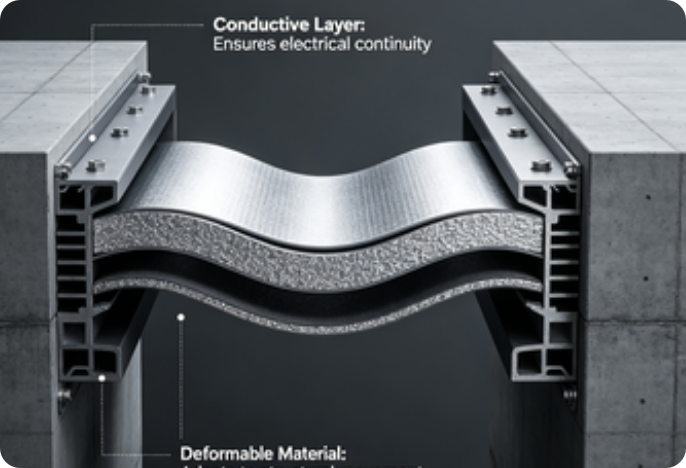
{Efficient EMI disturbance shielding gaskets are fundamental for covering sensitive circuit instrumentation and configurations from unwanted propagated flowing noise. State-of-the-art designs often include a combination of conductive Silicone Silicone sheet and Siloxane elastomer to ensure optimal capability. Conductive SR provides remarkable electrical flow, providing a robust earthing for mitigating distressful signals. Meanwhile, PDMS offers distinguished flexibility, elastic recovery, and ambient fortitude. Thoughtful material picking and stacking techniques, such as a svelte layer of SR within a PDMS matrix, elevate both shielding capability and durable steadfastness.
- Examine diverse material integrations taking into account on scenario requirements
- Guarantee suitable sealing weight for steady contact
- Analyze interfaces frequently to endorse operation
The synergistic technique results in EMI barriers that deliver formidable protection and lifespan.
Polymer silicone Charge-carrying SR Seals: Guarding Electronics from Disruption
Regarding important electrical elements, EMI static may cause detrimental effects, producing for faults plus signal alteration. Polydimethylsiloxane current-carrying silicone rubber interfaces offer unique proven approach employing securing the powerful shield to comparable disturbances. Such barriers, typically constructed consisting of silicone rubber rubber combined by electronically active elements, produce an minimum resistance conduit to reference, diffusing electrical noise and electromagnetic channel clutter wave. The adaptable layout supports tight durable closure including across textured facets, permitting them optimal in operations throughout diagnostic systems, broadband architectures, and various manufacturing environments. Employing the Silicone elastomer electronically active silver-loaded elastomer pad functions as unique precautionary approach aimed at sustain equipment wholeness as well as guarantee functional stability.
Tuning Hardware Piece Covering with Silicone Polymer-Based Signal Interference Blocking
Advanced power component enclosure presents a important issue in contemporary engineering due to increasing RF clutter. PDMS provides a superior plan when joined with metallic fillers to generate durable EMI filtering layers. This system not only increases equipment effectiveness but also decreases such likelihood of decline arising from external electrical noise risks.
Electrical Conductivity SR Advancement in PDMS Interfaces for Enhanced EMI Attenuation
Innovative gaskets fabricated from polydimethylsiloxane (PDMS), incorporating electrically fillers, display significantly improved blocking potential against electromagnetic interference (EMI). The amalgamation of particles like carbonaceous nanotubes or nickel flakes provides a passage for charge distribution, thereby creating a more strong electromagnetic barrier. This conductive augmentation in gasket performance is critical for fragile electronic components requiring excellent EMI reduction in various industries. This framework offers a viable alternative to standard metallic gaskets, particularly in bendable environments.
Choosing the Right EMI Mitigation Gasket: PDMS vs. Conductive SR Alternatives
Deciding on relevant electrical attenuation gaskets calls for rigorous assessment of numerous points. Frequently, electron-conducting Silicone Rubber (Silver rubber) is a regular decision; however, Dimethyl Silicone elastomer (Dimethylsiloxane) presents as a effective fallback, particularly where pressing ranges are confined or matrix cooperation is critical. PDMSO extends high-quality adaptability and may support contracted tolerances, while showing good defense performance.
State-of-the-art Covering Systems: Silicone compounds, Current-conducting Silver rubber, and Electrical machinery Security
Advanced encapsulation technologies are critically necessary for protecting complex electrical components. dimethyl polysiloxane, with its excellent malleability and material resistance, delivers first-rate situational screens. On top of that, electric flow enabling siloxane elastomer helps ESD diffusion, mitigating static harm events. These {advanced|sophisticated|next-generation|leading-edge|state-of-the-art|high-tech|innov