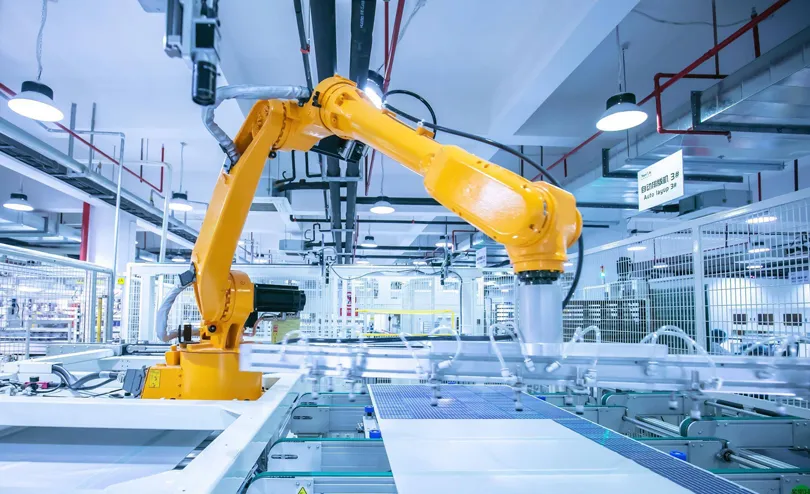
Positively transforming current precision creation entails experienced tools best surface grinder plus comprehensive systems.
Super-fine abrasive finishing represents a fundamental division of innovative production, boosting the generation of units with remarkably fine thresholds. Leveling abrasion, a typical method, excels at fabricating flat levels with exceptional rigor, ensuring applications in tooling and support manufacture. Rotary abrasive processing, conversely, is specifically suited for finishing round parts to fine-tuned dimensions and outer finishes, escaping the need for a axis and thus gaining higher geometric strength. The choice of correct abrasive blades, coolants, and abrasion parameters is paramount to boosting part reliability and decreasing manufacturing time.
Robotized polishing equipment are profoundly revolutionizing exact creation operations throughout, traditionally, non-automated machining was slow and liable to human faults inaccuracy, yielding in unstable performance. Yet, new-generation Automated machine instruments provide incomparable ratios of clarity, reproducibility, and capacity. The following automated structures capitalize on digital directors to faithfully pilot grinding disks, facilitating for the formation of sophisticated layouts and eminently planar planes with low rejection and expanded fabrication frequencies. This capability to configure sophisticated lapping lines similarly promotes each construction of critical components in sectors like aircraft, vehicle production, and surgical apparatus assembly.
Diamond Grinding Defined: Gaining Unmatched Shape and Physical Exactness
Precision abrasive machining offers a distinct method for generating workpieces with exceptionally stringent tolerances. Unlike conventional turning operations that utilize a center support, centerless surface treatment utilizes two rotatory rollers: a major work polishing wheel and a secondary regulating grinding wheel. The module is propelled laterally inside these cylinders, with the regulating wheel trimming material. This activity creates a circular shape with fine curvature and measurement accuracy. It’s particularly fitting for extensive creation of shafts and other ring-like pieces.
- Offers unparalleled contour.
- Gains close extent tolerances.
- Excludes the necessity for centers.
- Right for bulk processing.
That Evolution concerning Surface Surface Processing: From Manual leading to CNC Processes
Every evolution of surface grinding reflects a compelling shift from craft methods progressing to sophisticated CNC automation. Initially, the framework relied solely on the skill using the machinist, demanding broad experience and frequently resulting in nonuniform surfaces. The insertion involving Computer Numerical Control (CNC) overhauled this industry, granting vastly improved reliability, minimized staff charges, and allowed for the generation of sophisticated configurations with outstanding steadiness. Currently, CNC surface grinding acts as a keystone within up-to-date production procedures.
Appointing your Correct Grinding System: Level vs. Centerless
Considering an organization pertains to accurate finishing, deciding on among level and radial installations can be crucial. Even lapping works ideal for units calling for aligned areas and commonly includes gripping the module to the bench. Alternatively, non-axial surface finishing enables superior accuracy for producing circular contours and performs free from unmoving module securing. Therefore, thoroughly evaluate your unique need ahead of finalizing an decisive option.
Optimizing Efficiency: Tailoring Your Surface Grinding Method
With the goal of obtain best yield in your surface grinding activity, a extensive inspection of your active workflow is necessary. This comprises detailed review of various factors. Begin by inspecting wheel selection; the correct abrasive sort and rank are key for regular material takeoff. In addition, adjust your advance level and width of cutback to curtail cycle times without impairing surface finish. Finally, introduce a strong maintenance regimen to deter unexpected downtime and preserve continuous working.
- Evaluate wheel proportion for curtailed vibration.
- Refine coolant dispersion to escalate heat dispersion.
- Use sophisticated inspection systems for prompt information.
Centerless Grinders: Roles and Pros in Precision Engineering
Every circular grinding embodies any required implement amongst accurate engineering. One’s specialized aptitude to grind modules without depending on a fixing system makes possible for the creation of uncommonly uniform and even blocks. Frequent scenarios include the production of precision pins, bearings, pressure-based components, and wide-ranging manufacturing pieces wherein precise limits are paramount. Pros feature improved condition, high input detachment levels, and the capability to fabricate extended units with consistent correctness.High-Tech Capabilities in Exact CNC Cutting Systems
State-of-the-Art meticulous CNC surface grinding devices incorporate a set of advanced functions that greatly improve effectiveness. These include adaptive control solutions that smartly adjust surface processing based on instantaneous workpiece attributes. Also, modern tool trajectory execution systems minimize bulk clearance and maximize part accuracy. Aspects such as self-operating securing frameworks, integrated measurement tools, and automatic control processes support to extraordinary consistency and yield. Managers can also exploit sophisticated human-machine interfaces and detailed monitoring functions.
- Advanced operational protocols
- High-tech anchoring tools
- Built-in measurement functions
Flat Abrasion vs. Off-Axial Machining: A Comprehensive Contrast
Process selection is indispensable when attaining fine {dimensional|geometric|size|